

The Silent Crisis: Why Children Around the World have Stopped Reading
- Wilhelm Peters Jr.
- May 10
- 4 min read
I've come across a disturbing matter. As a storyteller this truly brakes my heart, we are failing the next generation of writers, creators, musicians, anybody that needs to communicate in this world. It's like we are literary moving backwards in today's society. are we going to allow this to continue?
This is a thing that should keep every guardian, teacher, and storyteller awake at night with a child who is not reading less. Never a little less, a lot less. And that only happens in one corner of the universe. It is a cosmic event, blooming softly from Tokyo to New York to London.
As a man who's been making anecdotes his whole life, the present hit near the house. Despite the individual sting, the place's object really dismays approximately who the facts state we. Allow us to investigate who's behind it, why it's happening, and if we can turn the tide before the next coeval loses the plot entirely.
The Numbers Don't Lie (And They're Not Pretty) sources found at the end of this blog
🇺🇸 United States: A Steady Decline
The United States. The National Assessment of Enlightening Progress (NAEP), also known as the Nation's Report Card, released sober information in early 2025. In 2024, the average number of scanning tons of equal fourth and eighth grade students drops two tips, a decline that has already stalled before the outbreak.
Here's the kicker: no one pronounces the addition of scanning compare until 2022. Never any of them. Only Atlanta public colleges, surrounded by a huge city district, refuse to add 4th grade. The news will never be wonderful, said Peggy Carr, head of the National Centre for Statistics. ''.
🇯🇵 Japan: The Manga Generation Gets Distracted
Japan is a fascinating research example. Despite its manga tradition and literary tradition, around one-half of Japan's students at present report rarely reading books, a 1.5 times increase over the previous period. Between 2015 and 2024, the daily interval between students from fourth class on down decreased by approximately 6 minutes.
The relationship be strike: elementary Asian lingo trials have an average correct answer measure of 67 % as a whole, but this rises to 74 % among children who still appreciate recitition. The message is clear: reading pleasure and exploring talent are bound by a tight embrace.
🇬🇧 United Kingdom: Enjoyment Plummets
The 2025 National Literacy Requirements Survey shows a significant change. Only 32.7 % of youth aged 8-18 claim to enjoy their free time studying. It was even worse: 18.7 percent of daily newspapers were read, a record low, about 20 percent below the 2005 level.
And he isn't just a aged child. Even during a period of 5-8 years, the rates are routinely projected to fall to 44.5 % over the past year.
🌍 The Global Picture
Zoom out, and the pattern becomes undeniable:
773 million people worldwide cannot read at all (up 2.2% in 2024-2025)
70% of children in low- and middle-income countries cannot read age-appropriate text
The percentage of students who never again barely ever read '' has risen from 22% to 31%, a 30-year minimum.
PISA assessments show falling reading proficiency across many participating nations
Why Is This Happening? (It's Complicated)
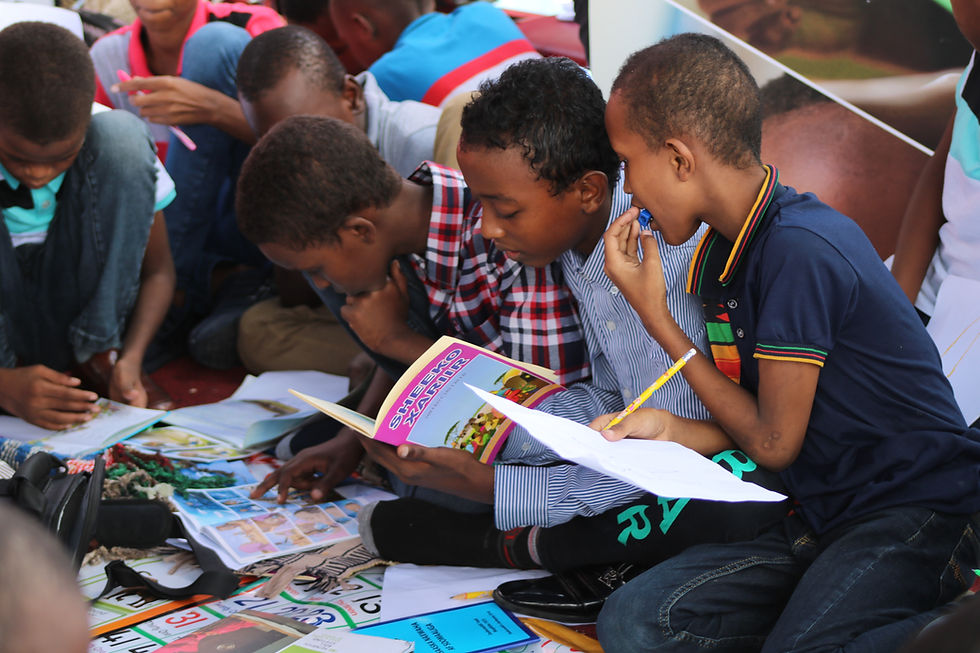
Let's not pretend this is simple. Multiple forces are converging:
1. Digital Distraction
Smartphones, short-form video, and programmatic news compete fiercely with books for attention. The instantaneous gratification crunch of TikTok and Instagram does not precisely construct the patience necessary for sustained reading.
2. Post-Pandemic Fallout
Academies close down the learning process, and recovery is uneven. Recitation seems to suffer more than mathematics in a lot of topographic points, as well as the fight between students becoming more difficult.
3. Changing Reading Habits
Even when children execute a text, it's often fragmented—social media posts, amusing chats, message programs. This isn't necessarily wrong, although it differs from the deep, fascinating study that constructs comprehension and vocabulary.
4. Access and Equity
The dilemma lies more fundamentally in the need for books, trainers, and systems in low income countries. Socioeconomic disparity in perusing achievement persists even in affluent countries.
5. The "Interest Gap"
Facts from the United Kingdom show that interest-based reading is one of the strongest incentives for poor readers. As it is now, educational institutions commonly organize courses on Above Choice, which will probably destroy curiosity before it blooms.
What Does This Mean?
For Storytellers Like myself, If minors are not recitation, they do not detect the recent universe, construct empathy through the experiences of fictional characters, or advance the cognitive muscle that together with sustained attention. Comic books, novels, and poetry are all losing the public.
For Society, Perseverance is correlated with everything from fiscal prudence to civic engagement for a healthy mind. People who read less read differently, and that differs from the way we process data, judge claims, and perceive each other.
For the Future, We are approaching a power generation transition in the way people interact with text. This isn't a catastrophe in itself, but it requires us to think carefully about who we might lose and who we might gain.
Can We Turn This Around? The data suggests several promising approaches:
Choice Over Coercion: Let kids pick what they read. Interest drives engagement.
Model Reading Behavior: Kids notice when adults actually read for pleasure.
Bridge Digital and Physical: Use technology to connect kids to books, not replace them.
Address Equity Gaps: Ensure all children have access to books and quality instruction.
Celebrate All Reading: Comics, graphic novels, fan fiction, they all count.
The Story Isn't Over, Here's what's going on in the turmoil; they're also possibilities. The fact that we are talking about this instrument shows that we are thoughtful. Because we've got an information tool, we've got a sense of where our priority is.
We have a choice, as Creators, Educator, Guardian, and Nation. We'll be able to watch the page turn backwards, or we'll be able to assist in turning it back.
The next chapter is unwritten. Let's make sure there's someone left to read it.
What are your thoughts? Who's doing your reflection? Have you noticed any changes in the perusing habit between the children of your life? Do you think comics and graphic novels deserve more credit as legitimate reading material? Let's put your ideas and thoughts under the comments and remember to be creative.
Sources:

Comments